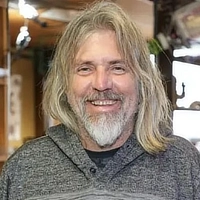
Forest Rohwer is a Distinguished Professor in the Department of Biology at San Diego State University and a globally recognized pioneer in marine virology and microbial ecology. His groundbreaking research has fundamentally transformed our understanding of how viruses shape ocean ecosystems and drive global biogeochemical cycles. Over the course of his career, Rohwer and his collaborators have catalogued and characterized vast viral diversity in marine environments, revealing that phages — bacteriophages that infect bacteria — are among the most abundant biological entities on Earth and play an indispensable role in regulating microbial communities and nutrient cycling. His work on coral reef microbiology has been especially influential, demonstrating how shifts in microbial and viral communities signal and accelerate reef degradation, with profound implications for conservation science. Rohwer has also contributed major conceptual and methodological advances to the field of metagenomics, helping to establish the computational and experimental frameworks that are now standard practice in environmental virology. He is the founder of the Viral Information Institute (VII) and a co-founder of iVirus, one of the largest repositories of viral sequence data. With hundreds of peer-reviewed publications and an H-index that places him among the most cited scientists in environmental microbiology, his internationally recognized leadership continues to inspire the next generation of researchers at the intersection of ecology, genomics, and virology.
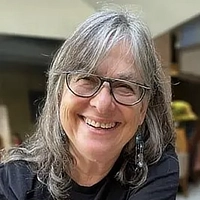
Anca Segall is a Professor in the Department of Biology at San Diego State University whose research at the intersection of molecular genetics and bacteriophage biology has yielded important and lasting insights into genome evolution, mobile genetic elements, and virus–host interactions. Her laboratory investigates the molecular mechanisms that govern DNA recombination, repair, and the dynamics of phage integration and excision within bacterial genomes, work that has broad implications for understanding horizontal gene transfer and the evolution of bacterial pathogens. Segall's research has also shed light on how bacteriophages exploit host cellular machinery during infection, providing a window into the co-evolutionary arms race between phages and their bacterial hosts that has shaped life at the microbial scale for billions of years. A long-standing member of the SDSU community, her contributions to microbiology and biotechnology extend well beyond the laboratory: she has been a dedicated mentor to undergraduate and graduate students, fostering rigorous scientific thinking and an appreciation for the elegant complexity of molecular biology. Her work has been supported by sustained federal funding and has resulted in numerous high-impact publications that have informed both basic research and translational applications in synthetic biology and antimicrobial development. Segall's collaborative spirit and deep expertise make her a cornerstone of the scientific community at SDSU and within the broader phage biology research network.
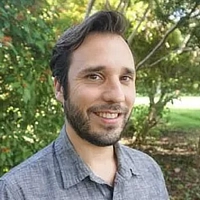
Toni Luque is an Associate Professor in the Departments of Biology and Physics at the University of Miami, where he leads a highly interdisciplinary research program at the confluence of physical virology, viral ecology, and virus bioinformatics. His laboratory applies the rigorous quantitative frameworks of physics and mathematics to dissect the structural and functional properties of viruses, probing how the geometry and mechanics of viral capsids constrain and enable infection strategies. This physicalist approach has opened new avenues for understanding viral evolution and has contributed to the emerging discipline of quantitative virology. In parallel, Luque's work in viral ecology leverages large-scale sequence data and computational modeling to map the distribution, diversity, and ecological roles of viruses across marine and other natural environments, revealing how viral communities respond to environmental change and regulate microbial ecosystem dynamics. His contributions to virus bioinformatics include the development of analytical pipelines and databases that have become valuable community resources for researchers characterizing novel viral genomes. Luque is also an enthusiastic science communicator and educator, passionate about bridging the physical and biological sciences in both research and the classroom. His affiliation with the University of Miami reflects his growing stature as a next-generation leader who is reshaping how scientists think about viral structure, function, and ecology through a uniquely quantitative lens.
Scholar Profile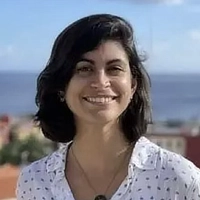
Cynthia Silveira is an Assistant Professor at the University of Miami, where she leads a dynamic research program centered on bacteriophages and marine viral ecology. Her work investigates how viruses shape the structure, function, and evolutionary trajectory of microbial communities in marine ecosystems, with particular emphasis on the complex interplay between phage infection dynamics and the health of ocean environments. Silveira's contributions to microbiology and virology have significantly advanced our collective understanding of how viruses act as ecological agents, driving nutrient cycling, controlling bacterial population sizes, and mediating gene exchange across microbial communities. Her research integrates field-based sampling, cultivation approaches, and state-of-the-art sequencing technologies to characterize viral diversity at unprecedented resolution, from individual coral reef microbiomes to open ocean viral assemblages. Silveira has also been instrumental in applying metagenomic and metatranscriptomic methods to reveal how viral communities respond to environmental stressors such as temperature shifts, pollution, and ocean acidification — insights with direct relevance to conservation biology and climate change research. As a mentor and educator, she is committed to training the next generation of environmental virologists, creating inclusive and intellectually stimulating research environments for students at every career stage. Her affiliation with the University of Miami places her at a strategic nexus of marine research, enabling continued discovery at the frontier of viral oceanography and ecosystem science.
Scholar Profile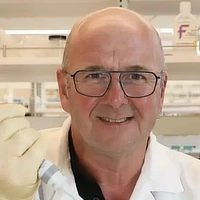
Rob Edwards is a Professor at Flinders University in Australia whose pioneering work in bioinformatics and viral metagenomics has been fundamental in advancing computational approaches to microbiology and environmental virology. Widely recognized as one of the architects of modern viral bioinformatics, Edwards has developed analytical tools, databases, and algorithms that have become indispensable to the global research community studying viral diversity and ecology. His PHASTER (Phage Search Tool Enhanced Release) platform for prophage identification in bacterial genomes is among the most widely used resources in phage biology, having processed millions of sequences from laboratories around the world. Beyond tool development, Edwards has led landmark metagenomic surveys that have catalogued viral diversity across a remarkable range of environments — from marine waters to the human gut — dramatically expanding our knowledge of the global virome and the ecological roles viruses play within it. His affiliation with Flinders University reflects both his leadership within the Australian and international scientific communities and his commitment to building bioinformatics capacity through collaborative research, open-source software, and intensive training programs. Edwards is also a dedicated educator who has mentored dozens of students and postdoctoral researchers, many of whom have gone on to lead their own research programs in computational virology and microbial genomics. His broad impact across the field of microbial genomics continues to grow with each new generation of tools and datasets he produces.
Scholar Profile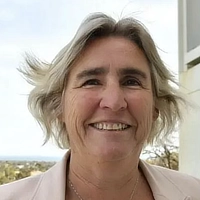
Liz Dinsdale is a Professor at Flinders University in Australia whose far-reaching research on sharks, marine microbial ecology, and environmental genomics has contributed valuable and transformative insights into the relationships between marine hosts, their associated microbiomes, and the broader ocean ecosystem. Her work on elasmobranch-associated microbiota has revealed how the microbial communities living on and within sharks and rays both reflect and influence host health, immune function, and ecological condition — establishing a new frontier in the study of host-microbiome dynamics in cartilaginous fishes. Dinsdale's contributions extend significantly into coral reef microbiology, where her research has illuminated how shifts in viral and bacterial communities serve as sensitive early indicators of ecosystem stress, providing both mechanistic explanations and practical monitoring tools for reef conservation. Her application of cutting-edge metagenomic and environmental genomics approaches has enabled the characterization of microbial and viral diversity at scales and resolutions previously unattainable, generating datasets that continue to yield new discoveries. As a collaborator within the Viral Information Institute and beyond, Dinsdale brings a uniquely integrative perspective that links marine biology, microbial ecology, and computational genomics into a coherent vision of ocean health monitoring and conservation science. Her affiliation with Flinders University highlights her interdisciplinary impact and her role in building research excellence in marine science and environmental genomics across the southern hemisphere and globally.
Scholar Profile© 2015, All Rights Reserved.
Rohwer Laboratory, San Diego State University.
Contact Info
Gina Spidel
sdsuvii.info@gmail.com